
Atlantic circulation record continues to show weakening
Long-term observations remain essential to establish the cause
Atlantic circulation continues to show a weakening trend, according to an observational update from the National Oceanography Centre. The RAPID programme’s latest analysis estimates a trend of −0.7 ± 0.6 Sverdrups per decade across its 20-year record, only slightly revised from the previous update.
RAPID has measured the Atlantic Meridional Overturning Circulation at 26°N since 2004. This current system helps regulate UK and European weather and climate. NOC researcher Dr Ben Moat says observations must continue through at least 2034 to establish whether the trend reflects natural long-term variability or human influence.
Why this matters for policymakers
- Monitoring continuity Long-term funding decisions should consider the observation period needed to resolve the trend’s cause.
- Climate assessment Risk assessments should retain uncertainty about attribution rather than assume human influence is established.
- Model evaluation Sustained measurements can help test climate-model projections against observed circulation.
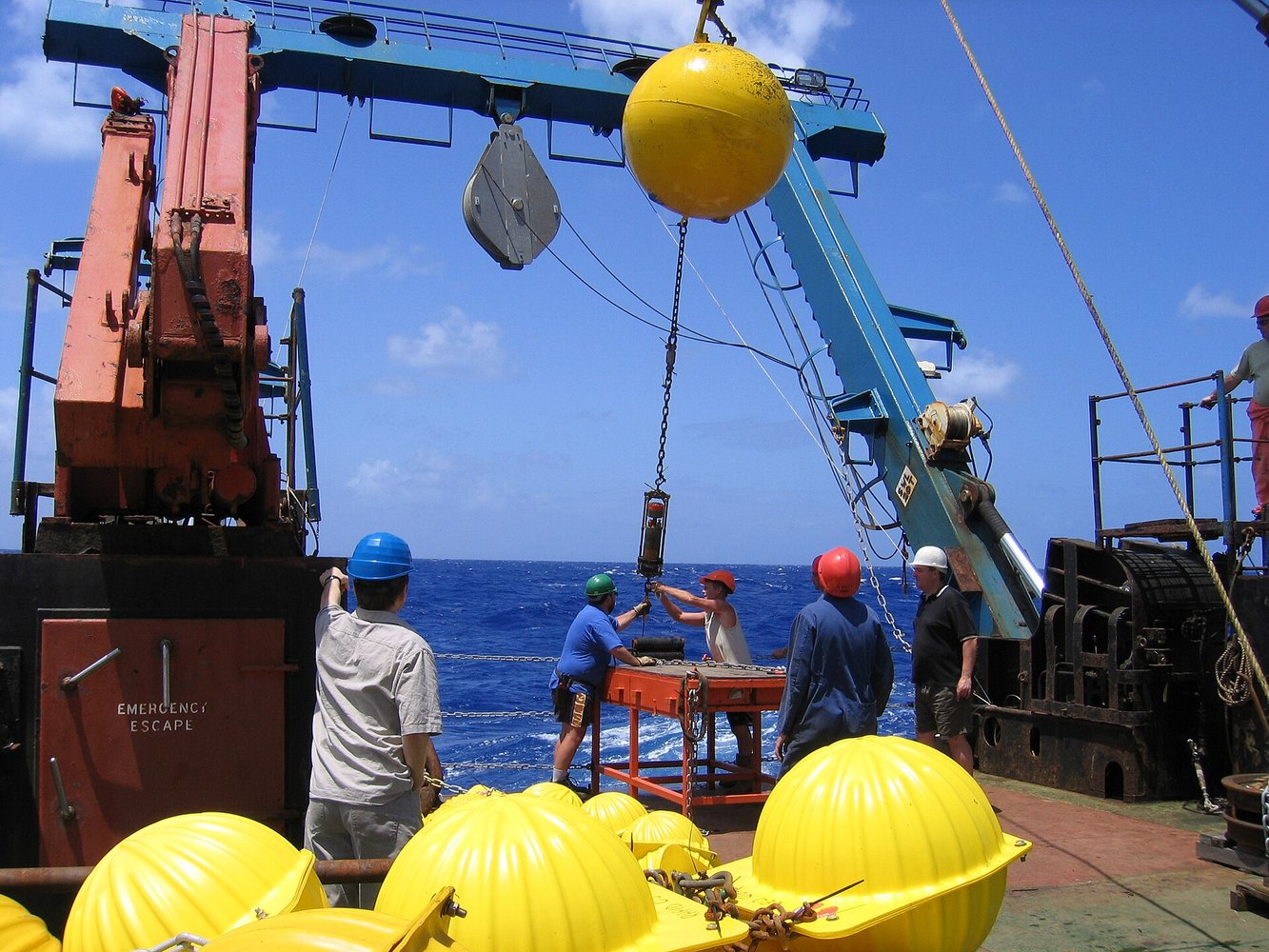
Image: Deployment of a RAPID mooring, illustrating the programme’s observing equipment rather than a deployment specifically linked to this update. Photograph: Mark Hebden, NERC, CC BY-SA 3.0. Mark Hebden, Natural Environment Research Council (NERC), CC BY-SA 3.0. Resized and converted to JPEG for display.