
Genomics guides treatment for rare platelet disorder
Repurposed cancer drug ends regular transfusions for two sisters
Two West Midlands sisters no longer need regular blood transfusions after receiving a repurposed cancer drug, according to the University of Birmingham’s announcement of research published in Blood. Genomic sequencing and laboratory work identified dasatinib as a potential treatment for SRC-related thrombocytopenia, a very rare disorder affecting platelet production.
The university and University Hospitals Birmingham team identified how the drug could dampen excessive SRC protein activity. Both adult sisters received it off-label. Their outcomes provide evidence from only two patients, not proof of effectiveness across the wider patient population; one sister continues regular hospital blood tests.
Why this matters for policymakers
- Genomic access The findings support examining access to specialist genomic diagnosis.
- Repurposing pathways Off-label treatment raises questions about evaluation and clinical oversight.
- Rare-disease evidence Wider use would need further safety and effectiveness evidence.
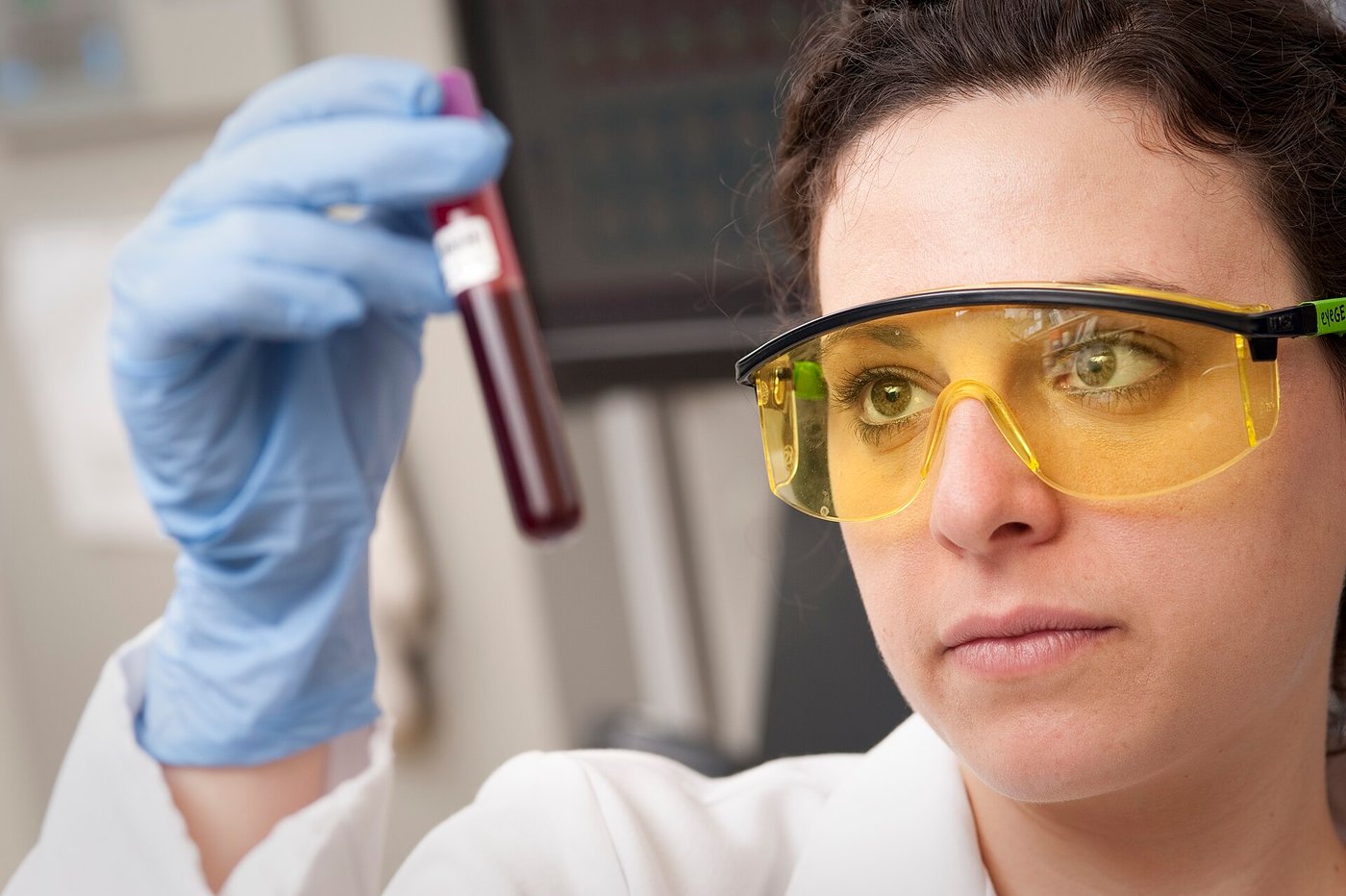
Image: Illustrative photograph of a scientist checking a blood sample, not the Birmingham research or its patients. National Eye Institute, CC BY 2.0. National Eye Institute, CC BY 2.0. Resized and converted to JPEG for display.