
Rare particle decay tests physics and highlights UK detector expertise
LHCb evidence agrees with the Standard Model while extending its experimental tests
An exceptionally rare particle transformation has yielded a further test of fundamental physics, according to a University of Birmingham announcement describing STFC-funded LHCb research at CERN. The collaboration reports the first evidence from a single experiment of a neutral B meson decaying into two muons.
Researchers combined 2024 and 2025 observations with data from 2011–2018, using machine learning and particle identification to isolate the signal. The measurements agree with Standard Model predictions, rather than establishing new particles or forces. Birmingham researchers contributed detector technologies and data collection.
Why this matters for policymakers
- Research infrastructure Our analysis: funding assessments should consider long-term returns from international facilities.
- Specialist skills Our analysis: detector engineering and data-analysis expertise are complementary research capabilities.
- Evidence standards Our analysis: scrutiny should distinguish initial evidence from established discovery.
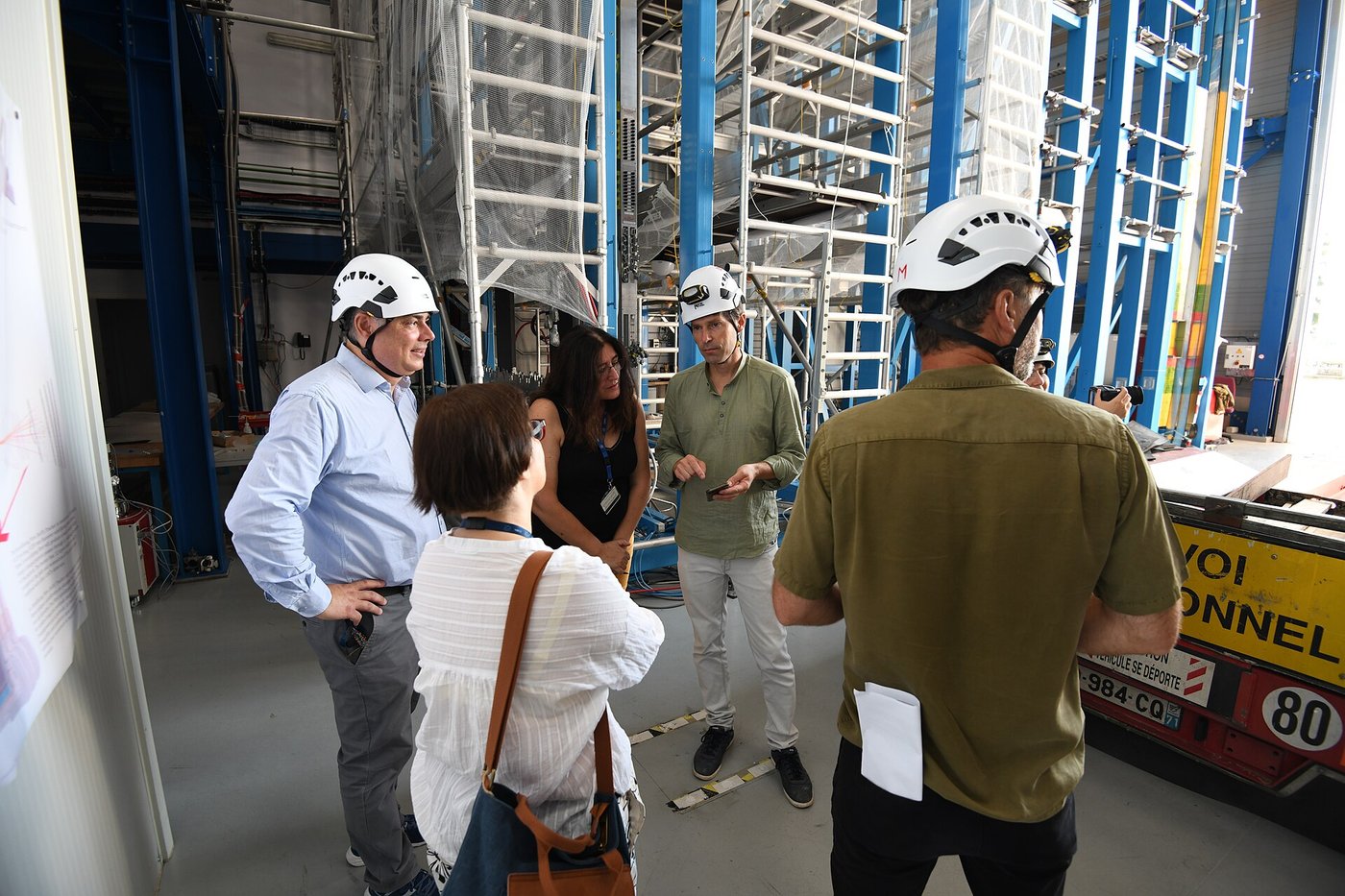
Image: Illustrative photograph of LHCb’s former Outer Tracker being transported for reuse at GSI’s PANDA experiment, not the upgraded detector used for the reported measurements. Photograph: Piotr Traczyk, CC BY 4.0. Traczyk, Piotr, CC BY 4.0. Resized and converted to JPEG for display.