
Seafloor food depletion persists 44 years after mining test
Pacific sediment study highlights long-term questions for environmental regulation
Food resources remained depleted 44 years after a deep-sea mining test, according to a University of Liverpool study published in Elementa: Science of the Anthropocene. Researchers found lower quantity and quality of sediment organic matter at the disturbed Pacific site.
In 2023, the SMARTEX team sampled sediments around 4,800 metres deep in the Clarion-Clipperton Zone, comparing disturbed areas with an undisturbed control site. Depleted organic matter was linked to lower abundances of larger animals and single-celled organisms. The association does not establish that food depletion caused those differences.
Why this matters for policymakers
- Environmental assessment Our analysis: food quantity and quality merit inclusion alongside organism counts.
- Monitoring Our analysis: recovery assessments need evidence spanning decades.
- Evidence gaps Our analysis: regional comparisons are needed before generalising from this site.
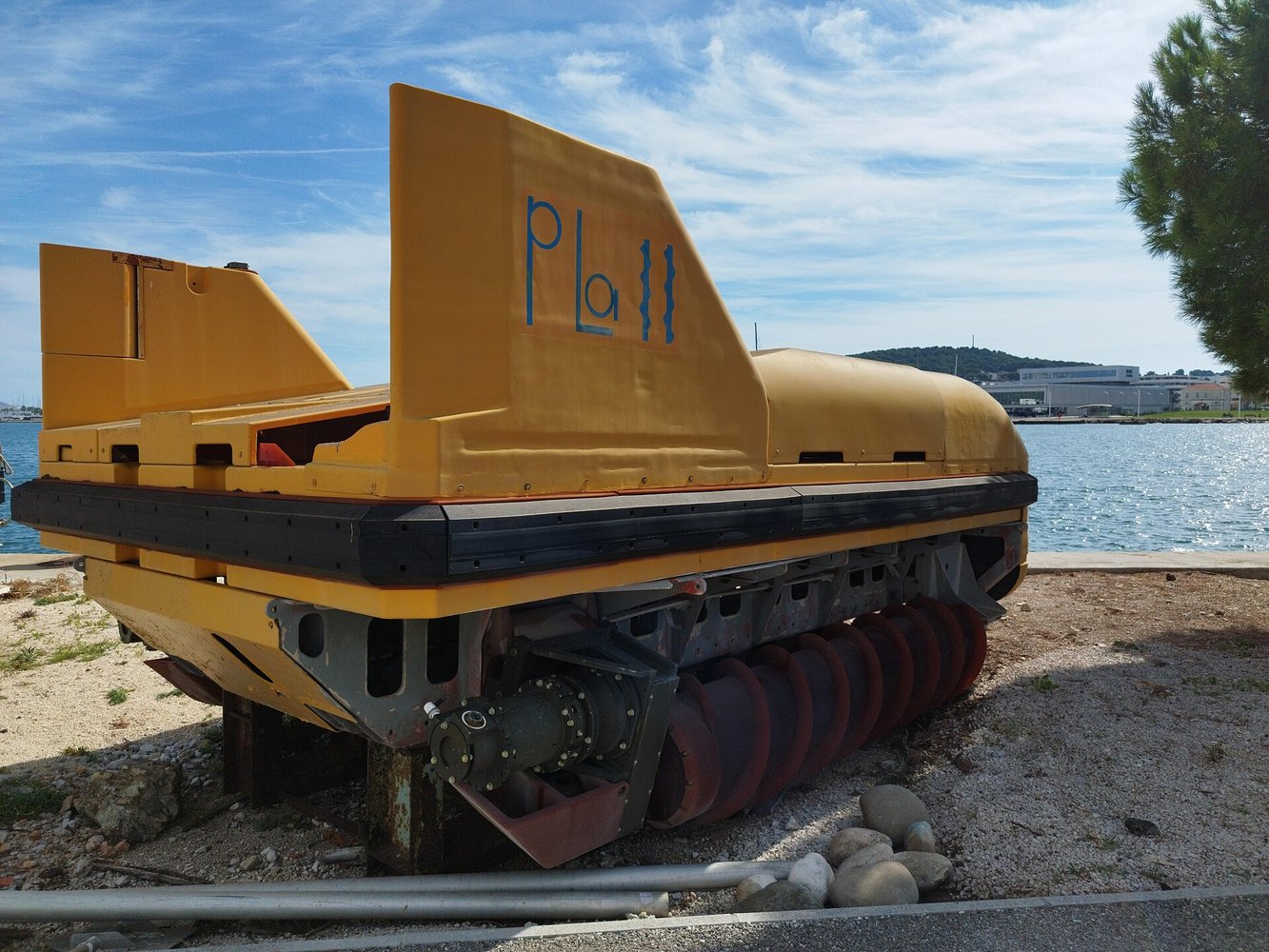
Image: Illustrative photograph of Ifremer’s PLA-2 prototype for collecting polymetallic nodules, displayed ashore. This is not the machine used in the 1979 mining test. Emmanuel Maros (IFREMER, Pôle Images, Centre Bretagne - ZI de la Pointe du Diable - CS 10070 - 29280 Plouzané, France) Emmanuel Maros (IFREMER, Pôle Images, Centre Bretagne - ZI de la Pointe du Diable - CS 10070 - 29280 Plouzané, France), CC BY 4.0. Resized and converted to JPEG for display.