
UN report highlights ocean carbon monitoring gaps
Observations and data infrastructure underpin assessment of marine climate interventions
Gaps in ocean observations and data systems limit governments’ ability to assess marine climate risks, according to a UNEP report described in a National Oceanography Centre announcement. NOC’s Professor Christopher Pearce co-authored the 2026 Climate Technology Progress Report, which connects monitoring, modelling and analytical tools through an Ocean Carbon Intelligence framework.
The report warns that warming, acidification and other pressures are altering processes underpinning ocean carbon storage. It examines ecosystem restoration and emerging marine carbon dioxide removal approaches, stressing that these can complement, but not replace, rapid and sustained emissions reductions.
Why this matters for policymakers
- Infrastructure UK funding decisions should consider sustained observations alongside data systems and modelling.
- Governance Marine intervention assessments should require transparent evidence and environmental safeguards.
- Climate planning Policy should not assume ocean carbon uptake will continue unchanged.
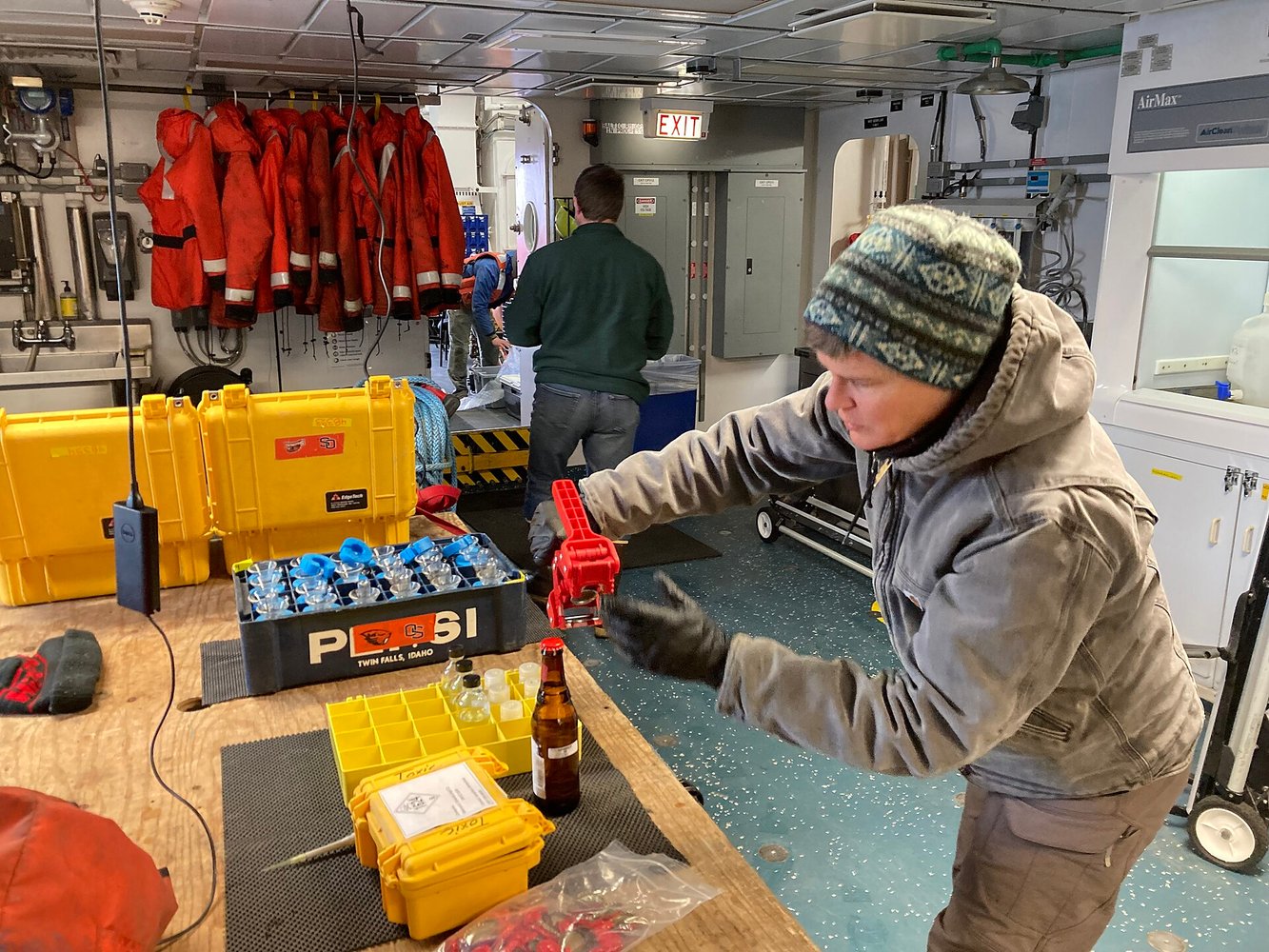
Image: Illustrative photograph of seawater sampling in an Ocean Observatories Initiative wet laboratory, including bottles used for dissolved inorganic carbon samples; not research conducted for the UNEP report. Ocean Observatories Initiative, Public domain. Resized and converted to JPEG for display.