Muon g-2 Experiment Honoured with Prestigious Breakthrough Prize in Fundamental Physics
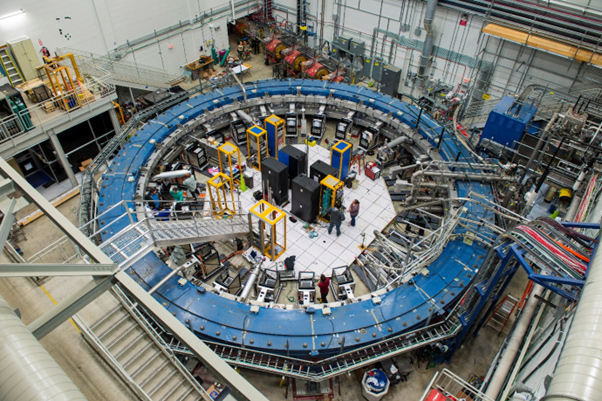
The Muon g-2 experiment has been awarded the prestigious Breakthrough Prize in Fundamental Physics, recognising its groundbreaking contributions to our understanding of particle physics. Conducted at Fermilab with significant international collaboration, including researchers from the University of Liverpool, the experiment investigates the magnetic properties of the muon—a heavier cousin of the electron. By measuring how muons wobble in a magnetic field, scientists aim to test the predictions of the Standard Model, the current theoretical framework describing fundamental particles and forces.
Recent findings from Muon g-2 suggest a potential discrepancy between experimental results and theoretical predictions, hinting at the possibility of new physics beyond the Standard Model. This has generated considerable excitement within the scientific community, as confirming such deviations could reshape our understanding of the universe’s fundamental structure.
The Breakthrough Prize acknowledges both the technical achievement of conducting such a precise and complex experiment and the broader implications of its findings. The collaboration involves hundreds of scientists worldwide, reflecting the global nature of modern physics research. The award underscores the importance of sustained investment in fundamental science and highlights the UK’s role in advancing cutting-edge international research.
Key Points for Policymakers
- Long-term investment in fundamental research can yield globally significant scientific breakthroughs.
- International collaboration is essential for large-scale scientific innovation.
- Emerging evidence of physics beyond the Standard Model could drive future technological and scientific advancements.
- Continued funding for particle physics infrastructure and talent development is crucial.

