Practical Science Programme Targets Schools with Least Access to STEM
The Royal Society has awarded ten Science Community Grants designed to bring sustained, practical science activity to schools and colleges with limited access to STEM enrichment.
Each funded organisation will recruit 25 schools and work with them for three years. The awards, worth up to £105,000 each, are intended to create long-term local partnerships rather than isolated visits or one-off activities.
Projects will connect practical investigations to local circumstances. Students will explore subjects including waterways, biodiversity, air quality, renewable energy, vaccine uptake, climate resilience, materials and 3D printing. Participating teachers will also be able to share practice and work with STEM professionals from academia and industry.
The programme therefore addresses more than participation in individual activities. It aims to strengthen the local relationships, teacher confidence and practical opportunities that help young people see science as relevant and attainable.
Why this matters for policymakers
- Access to practical science remains uneven. Place-based programmes can direct resources towards pupils who currently encounter fewer enrichment opportunities.
- Short interventions are not enough. Multi-year partnerships give schools and community organisations time to build capability and evaluate what works.
- Teachers are part of the infrastructure. Peer networks and contact with working scientists can leave lasting benefits after grant funding ends.
- Science participation is a pipeline issue. Early access to investigation and experimentation affects scientific literacy as well as progression into future study and employment.
Read the original announcement from the Royal Society.
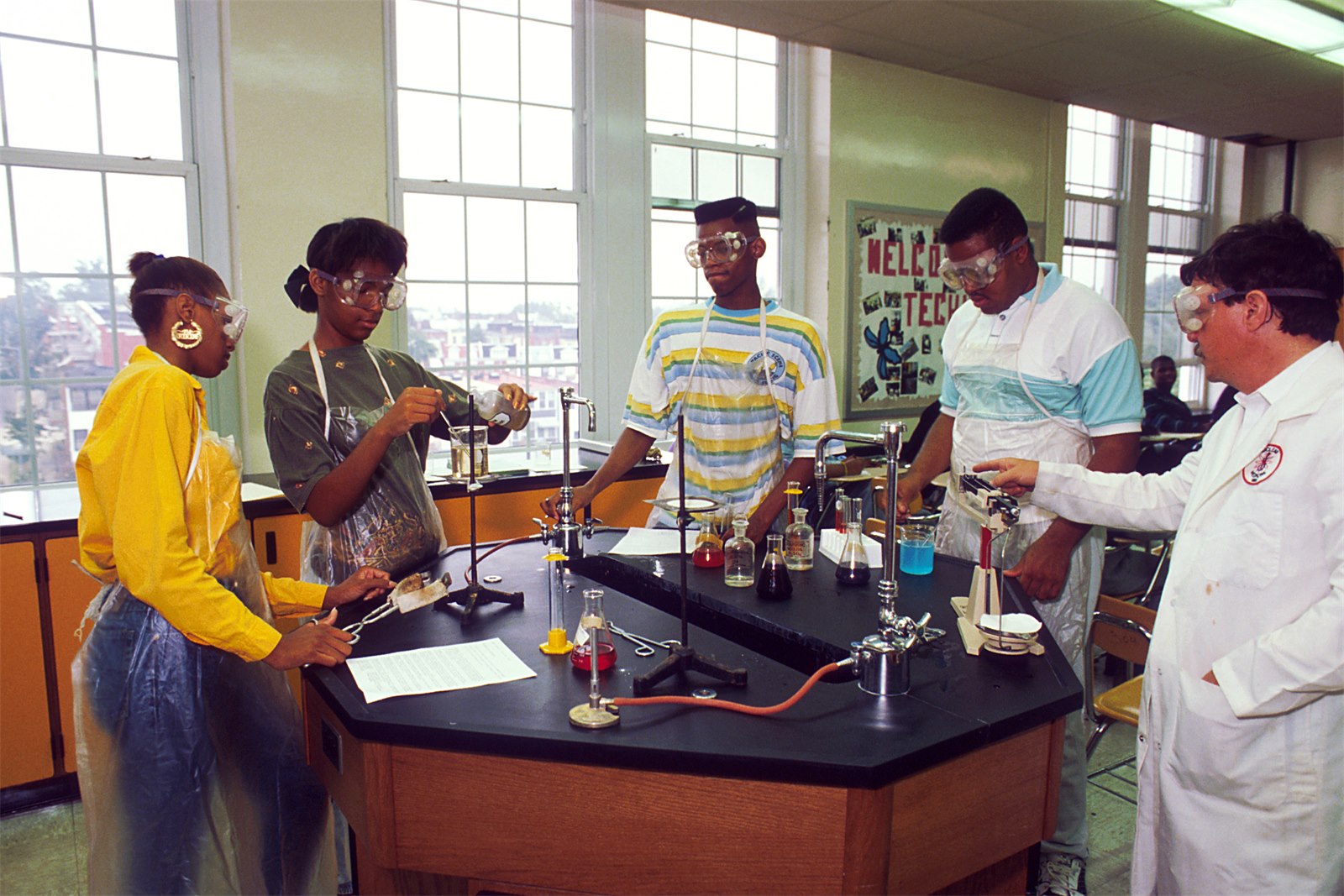
Image: high-school students conducting experiments. National Cancer Institute / National Institutes of Health; public domain.

