
UEA Award Strengthens the UK's Medical Research Skills Pipeline
The University of East Anglia has secured a share of a £90 million Medical Research Council investment intended to strengthen the next generation of UK medical researchers.
The wider programme will support more than 200 doctoral researchers each year for three years at universities across the country. At UEA, a new MRC Doctoral Landscape Award will fund 14 PhD students annually across three intakes beginning in October 2027.
The students will receive specialist training in nutrition science, microbiology and clinical research, with a particular focus on nutrition, microbiomes and antimicrobial resistance. The programme brings UEA together with the Norfolk and Norwich University Hospital, Quadram Institute, John Innes Centre and Earlham Institute across the Norwich Research Park.
By combining biomedical, clinical and health-science expertise with broader preparation for careers in research, healthcare, industry and policy, the award is designed to develop researchers able to address emerging health threats and translate discovery into practical benefit.
Why this matters for policymakers
- Research capacity depends on people as well as facilities. Sustained doctoral investment is essential if the UK is to maintain capability in strategically important areas of health science.
- Antimicrobial resistance requires multidisciplinary skills. Progress depends on researchers able to connect microbiology, nutrition, clinical evidence and population health.
- Regional clusters can turn training into wider capability. Linking a university, hospital and specialist institutes gives researchers access to complementary expertise while strengthening the Norwich life-sciences ecosystem.
- Career pathways influence whether talent is retained. Training that prepares researchers for roles across academia, healthcare, industry and policy can help the UK capture more of the value created by public research investment.
Read the original announcement from the University of East Anglia.
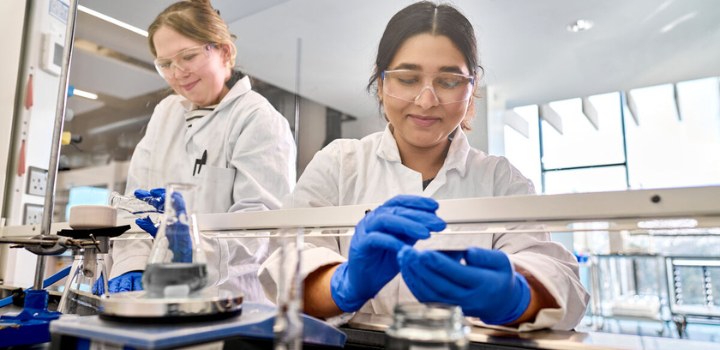
Image: researchers conducting an experiment, courtesy of the University of East Anglia.
